
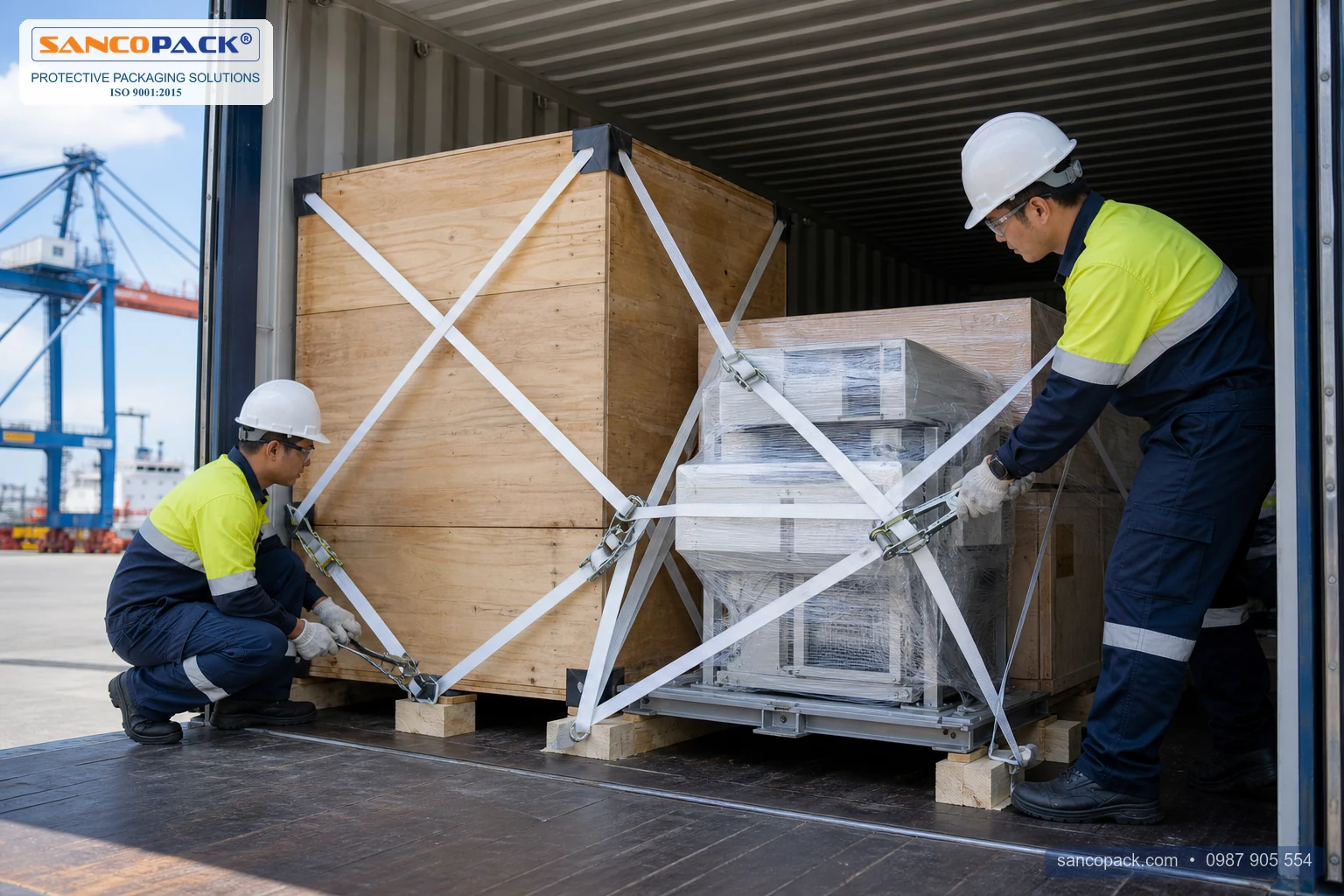
Treat strapping as a complete securing system
Cargo restraint does not depend on the strap alone. The buckle or joint, tensioning tool, edge protectors, anti-slip support, pallet condition and strap layout all influence the result. Replacing one strap with another while keeping an unsuitable buckle or an uncontrolled operating method can reduce system performance. Procurement and warehouse teams should therefore approve a complete configuration and a repeatable work instruction rather than approving only a strap code.
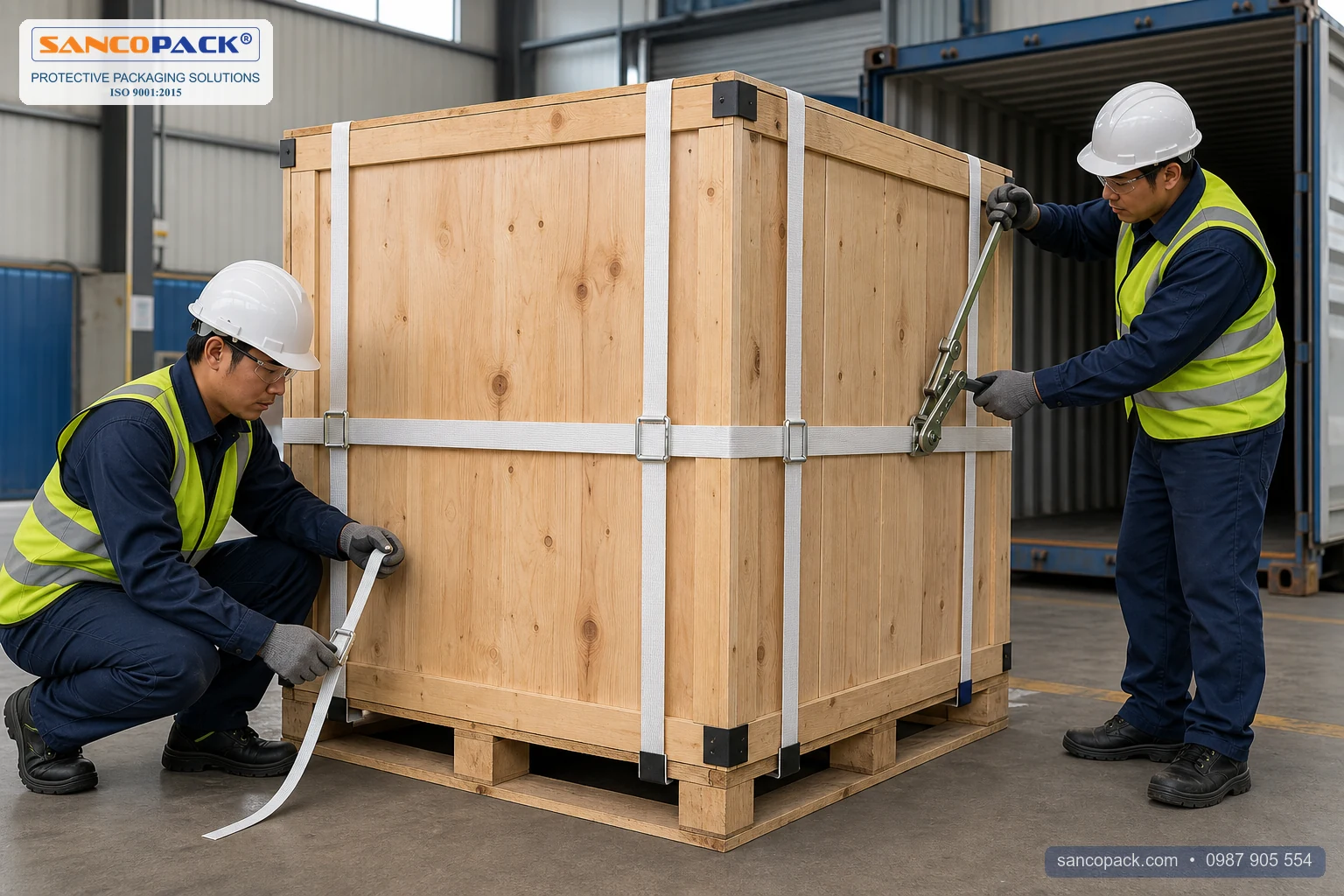
Collect shipment data before selecting a strap
- Package or cargo-group mass, dimensions and centre of gravity.
- Whether the load is rigid, compressible, likely to settle or able to change shape during transit.
- Sharp, rounded or fragile contact edges and the available area for edge protection.
- Transport mode, route length, transfers, handling frequency and expected vibration.
- Manual, pneumatic or battery tensioning method, together with the exact buckle or joint.
- Number of straps, strap direction and available anchor points on the pallet, crate or vehicle.
The route matters because a short internal move and an international multimodal journey do not expose the package to the same vibration, handling and climatic conditions. Photographs, a loading drawing and actual measurements are more useful than a request based only on cargo weight.
Do not use breaking strength as the only decision
Published strap strength is only one input. Retained force also depends on joint efficiency, bend radius at the package edge, initial tension and the way the load settles. A high nominal value does not correct a weak joint, a damaged edge or a poor layout. Ask the supplier to confirm the compatible strap, buckle and tool, then trial that combination on the real package. Any change to one component requires a new check.
Protect both the strap and the cargo
A sharp edge can cut or weaken a strap, while excessive tension can crush cartons, deform a crate or damage a coated surface. Correct edge protectors distribute force and help the strap remain in position. Confirm that protectors do not slip after forklift handling and that the strap does not rub directly against nails, corners or moving metal parts.
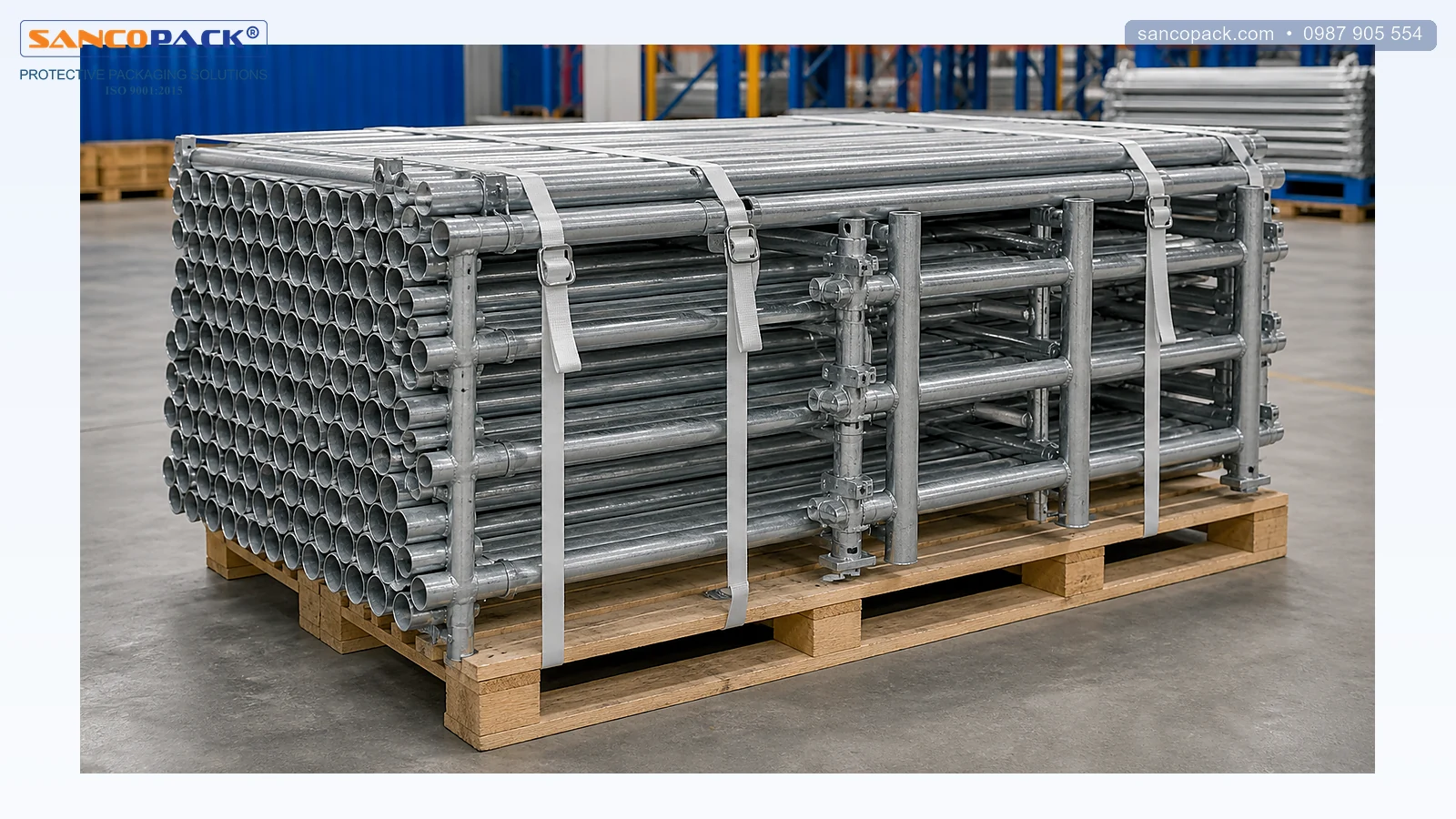
Run a controlled package trial
- Install the intended strap, buckle, tool and edge protectors on a representative package.
- Record the tool setting or applied tension according to the technical instruction.
- Inspect every joint, strap path and contact edge immediately after tensioning.
- Lift and move the package, then check for sliding, settling, looseness or package deformation.
- Photograph the accepted layout and issue a visual work instruction for operators.
Final acceptance checklist
- No strap is twisted or in direct contact with a sharp edge.
- Every buckle or joint is the approved type, correctly oriented and free from visible slip.
- Edge protectors remain stable after the handling trial.
- Packaging is not crushed, torn or distorted by the applied tension.
- The accepted configuration is documented with photographs, material codes and tool settings.
Sancopack should receive the package dimensions, mass, photographs, route and handling method before recommending a configuration. Product names alone are not enough to confirm a safe working load, and technical approval should be completed before the solution is used across all shipments.
Frequently asked questions
Can cargo strapping be selected only by package weight?
No. Package shape, centre of gravity, edges, route, joint, tool and strap layout must also be assessed.
Must the system be retested when the buckle changes?
Yes. The buckle or joining method affects joint efficiency and retained force.
Why can a strap become loose after tensioning?
The load may settle, the strap may move at an edge or the joint may be unsuitable. Check the complete system on a real package.