
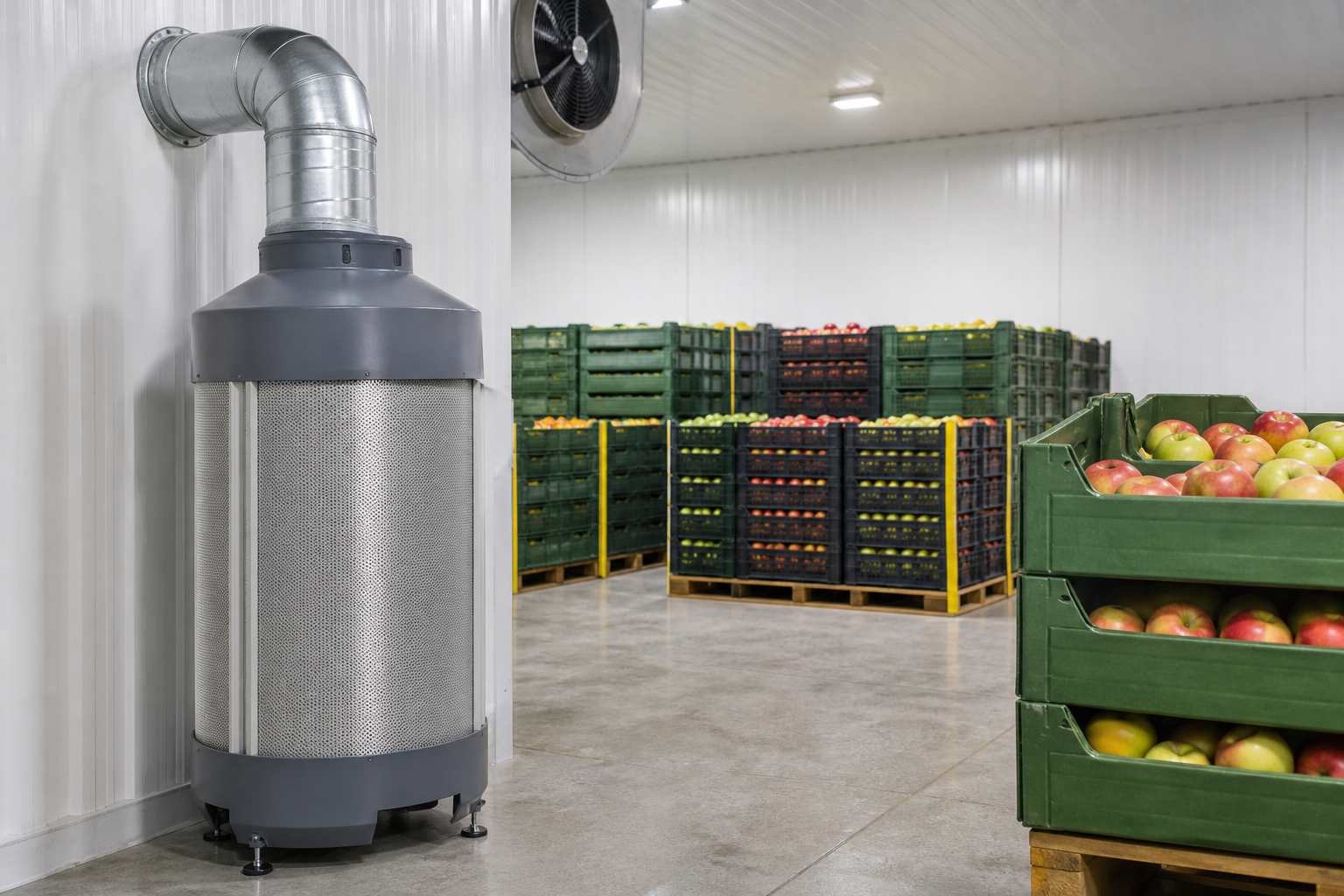
How ethylene affects stored produce
Ethylene is associated with ripening in many fruits, vegetables and flowers. Some commodities release substantial amounts while others respond to low concentrations. Incompatible products stored together may ripen faster, yellow, soften or lose marketable life. The outcome also depends on temperature, exposure time, ventilation and the incoming condition of each lot.
Five controls that should work together
- Group commodities by ethylene production and sensitivity before assigning storage locations.
- Maintain the correct temperature and humidity; gas treatment does not replace refrigeration.
- Keep airflow paths open around pallets, crates and the treatment unit.
- Remove over-ripe or damaged produce and avoid combustion sources in enclosed storage areas.
- Monitor product condition and gas levels on a planned schedule so treatment load can be adjusted.
Select equipment for the actual storage load
Room volume is only one input. Review incoming product volume, commodity type, maturity, door-opening frequency, ventilation and the preservation objective. Adsorption or ethylene-treatment equipment needs adequate airflow and a location that allows room air to pass through the treatment medium rather than bypassing it.
Operating records reveal deviations early
Record receipt date, source, pulp temperature, room temperature, door activity, product condition and equipment maintenance. If quality changes, these records help distinguish temperature, ethylene exposure, storage time and incoming-lot effects. Shelf-life claims should not be made without trials using the relevant cultivar, maturity and cold-room conditions.