
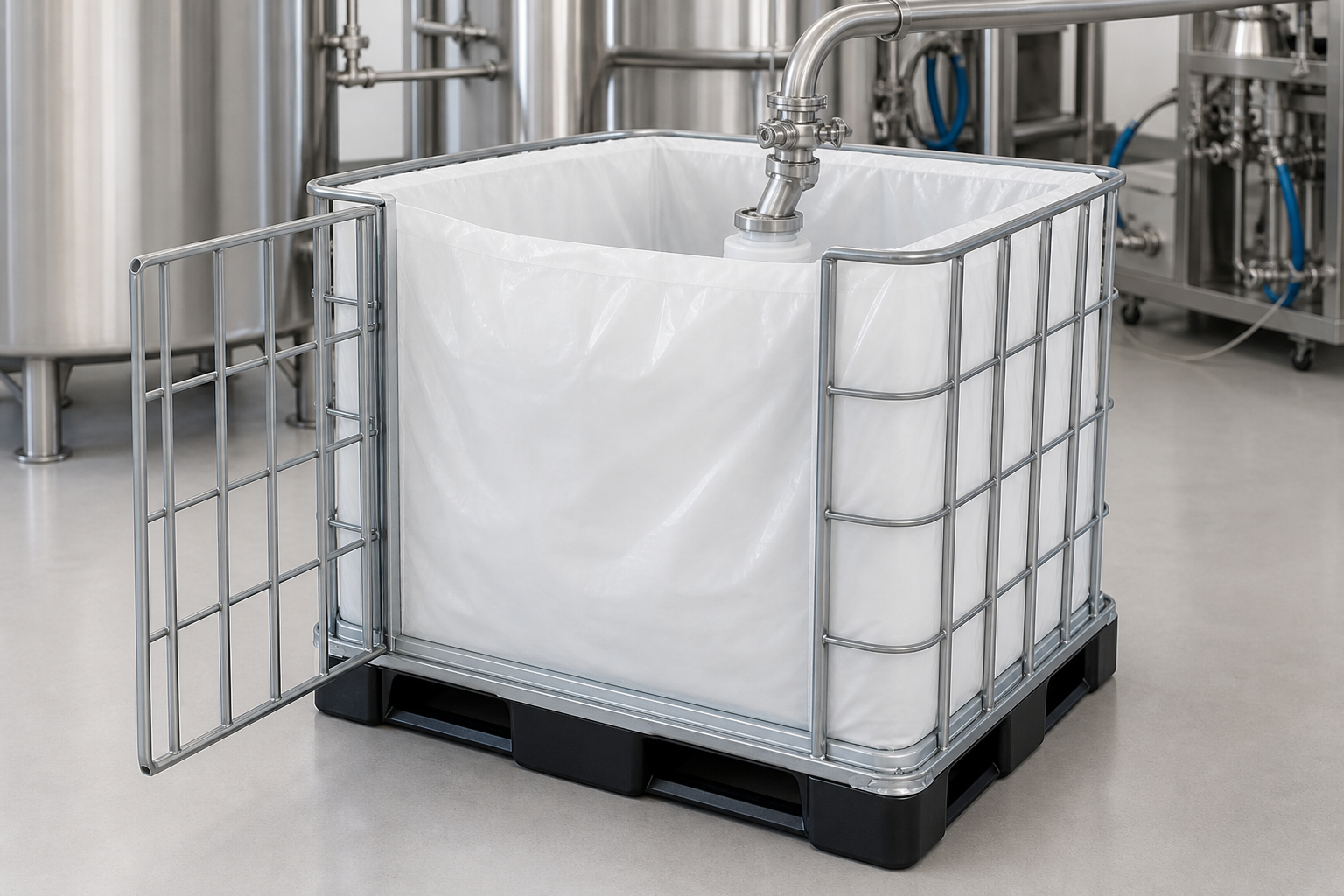
Nominal volume is not enough to select a liner
Two liquids using the same 1,000-litre package may require different film structures, barrier performance, seam strength and fittings. Essential inputs include liquid identity, composition, density, viscosity, filling temperature, contact time, transport conditions and hygiene requirements. Food and chemical applications require compatibility and contact documentation for the exact liner specification.
Technical checklist before requesting a quotation
- Define the liquid, concentration, density, viscosity and temperature at filling.
- Confirm the outer frame or box, internal dimensions and the way the liner is supported.
- Select filling and discharge fitting positions and sizes that match both facilities.
- State storage duration, transport mode, vibration, temperature and stacking conditions.
- Specify food-contact, chemical, cleanliness, batch-traceability and quality-document requirements.
Compatibility review and filling trial
Before routine use, assess material compatibility and conduct a filling trial with the intended frame, pump, fittings and filling rate. Inspect seams, folds, full-package stability and discharge performance. A result for one liquid should not be transferred to another without reviewing composition and contact conditions.
Common causes of leakage and handling difficulty
A twisted liner, unsupported fitting, sharp cage edge, excessive filling rate or trapped air can all create local stress. The procedure should cover outer-container inspection, liner placement, connection support, venting, filling observation and final closure.