
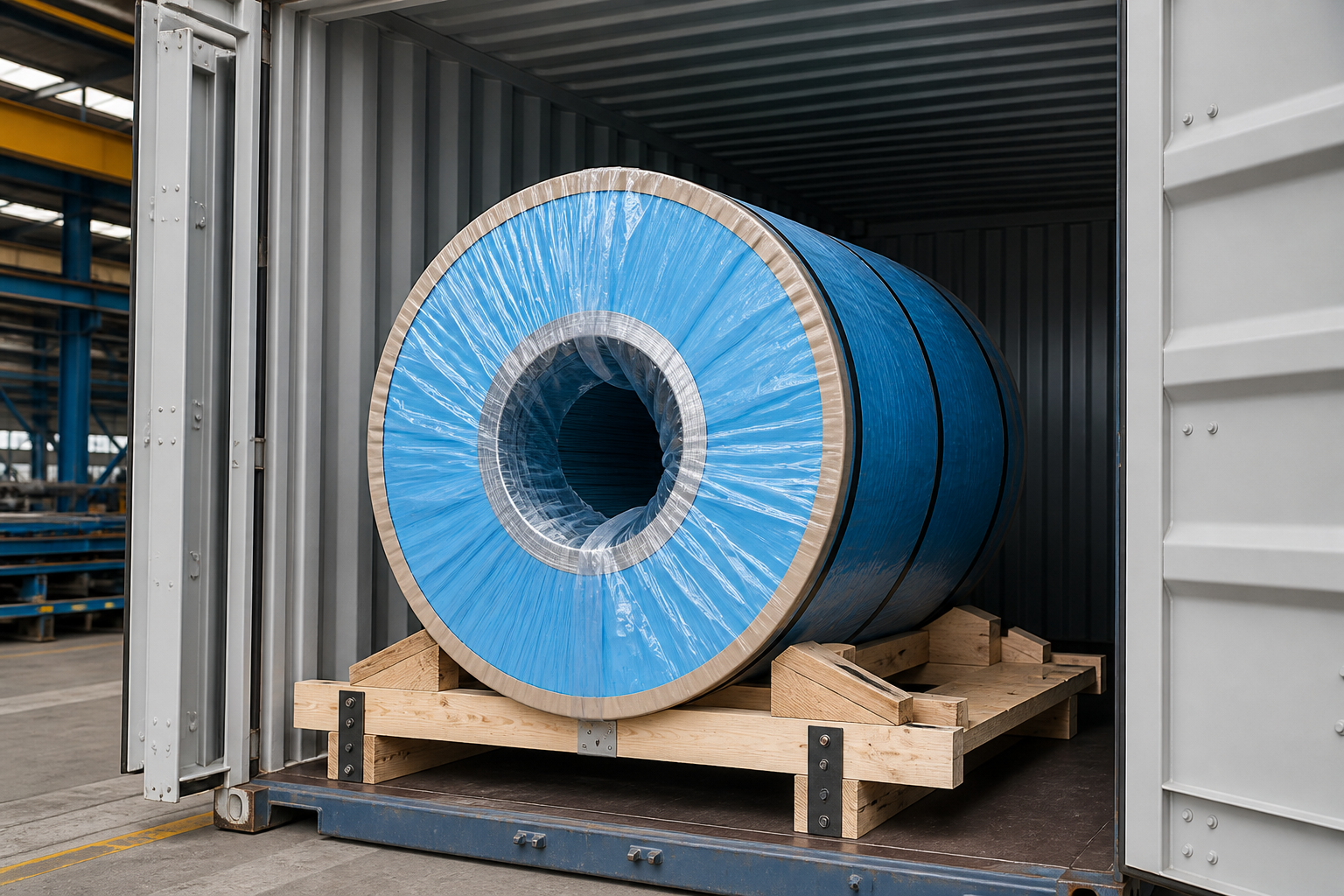
Why steel coils corrode during sea transport
A steel coil is mechanically robust but its exposed surfaces remain vulnerable to humidity, salt and temperature changes. As a container or vessel crosses climate zones, humid air can condense on colder metal. Moisture trapped at coil edges, between wraps or near the support cradle accelerates corrosion. An outer cover alone is therefore insufficient when surface cleanliness, internal humidity and seal integrity are not controlled.
Build protection as a layered system
- Clean and dry the surface before packing, removing water, salts, fingerprints and process residue.
- Select a VCI or corrosion-control material that is compatible with the metal and required protection period.
- Create a sealed moisture barrier and protect coil edges so the barrier is not punctured by restraints.
- Size desiccant capacity for the enclosed volume, barrier quality, route and expected storage duration.
- Secure the coil on an engineered cradle with suitable anti-slip control and load distribution.
Checks before container loading
Confirm that the container floor and walls are dry, clean, intact and free from unusual odours. Inspect every seal, taped joint, restraint penetration, timber contact point and sharp edge after packing. Shipment records should retain condition photographs, material batch references, packing date and inspector identity.
Data required for a reliable specification
Provide the steel grade, surface condition, coil dimensions and mass, target protection period, transport route, container type and unpacking conditions. Quantities of VCI and desiccant should only be finalised against verified shipment data and the technical documentation for the selected materials.