
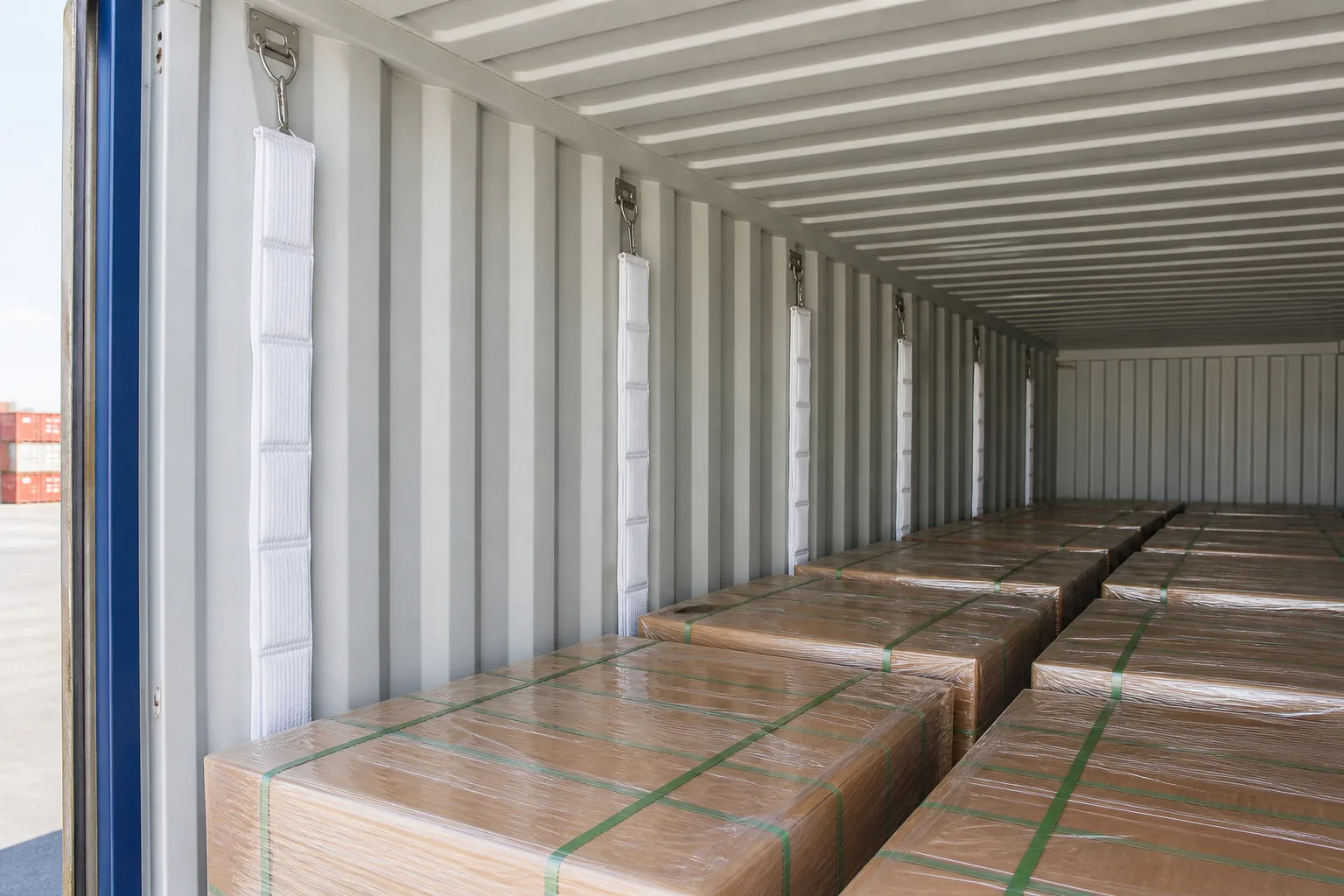
Why does condensation form inside a container?
Air inside a closed container still contains water vapour. As wall, roof and cargo temperatures change during the day and across the route, a cold surface can fall below the dew point. Water may then collect on the container structure or directly on the cargo, often described as container sweat and cargo sweat. The IMO/ILO/UNECE CTU Code identifies temperature variation and moisture released by cargo and dunnage as conditions that must be considered before the unit is closed.
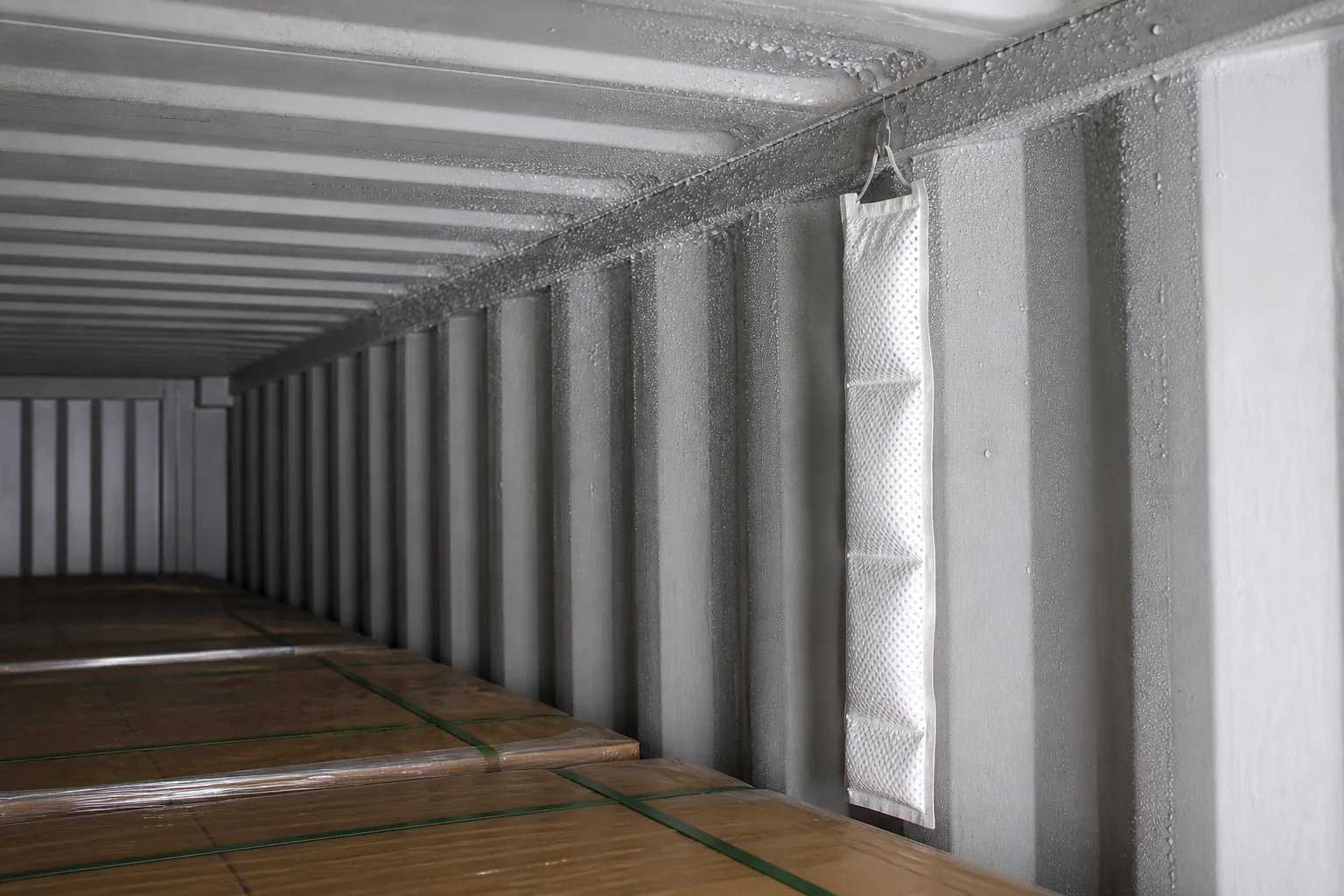
Control moisture sources before sizing desiccants
- Inspect the container for a dry, clean and intact interior, including suitable doors and seals.
- Confirm that cargo, pallets, timber, cartons and dunnage are not bringing abnormal moisture into the unit.
- Review package sealing and moisture-barrier performance at product, case and container level.
- Record the route, season, port dwell time, transit duration and expected climate zones.
- For sensitive cargo or a new route, consider temperature and humidity logging to support later adjustments.
Do not use one fixed quantity for every container
Required absorption capacity depends on air volume, initial moisture in the cargo and packing materials, barrier quality, route, season and duration. The CTU Code also states that adequate absorption capacity should be calculated when drying agents are used. A universal number for every 20-foot or 40-foot container is therefore unreliable. Final quantities should be checked against verified shipment data and the technical documentation for the exact desiccant product.
Install hanging strips safely
Hanging products such as Super Dryer or an equivalent container desiccant must be matched to the confirmed product code and instructions. Secure strips at suitable points, distribute them around the load and keep them away from sharp edges, crushing and forklift contact. They must not interfere with cargo securing, door closure or ventilation designed for the commodity. Where absorbed moisture may create a liquid, follow the product requirements for leak protection and separation from cargo.
Pre-closing checklist
- Photograph the floor, roof, walls, doors and seals after inspection.
- Record cargo, pallet and carton moisture or dry-condition checks required by the shipment procedure.
- Install the confirmed desiccant type, quantity and positions shown in the loading plan.
- Recheck restraints, clearances and potential contact points before closing the doors.
- Retain inspection photos, material batch details, packing date and inspector identity.
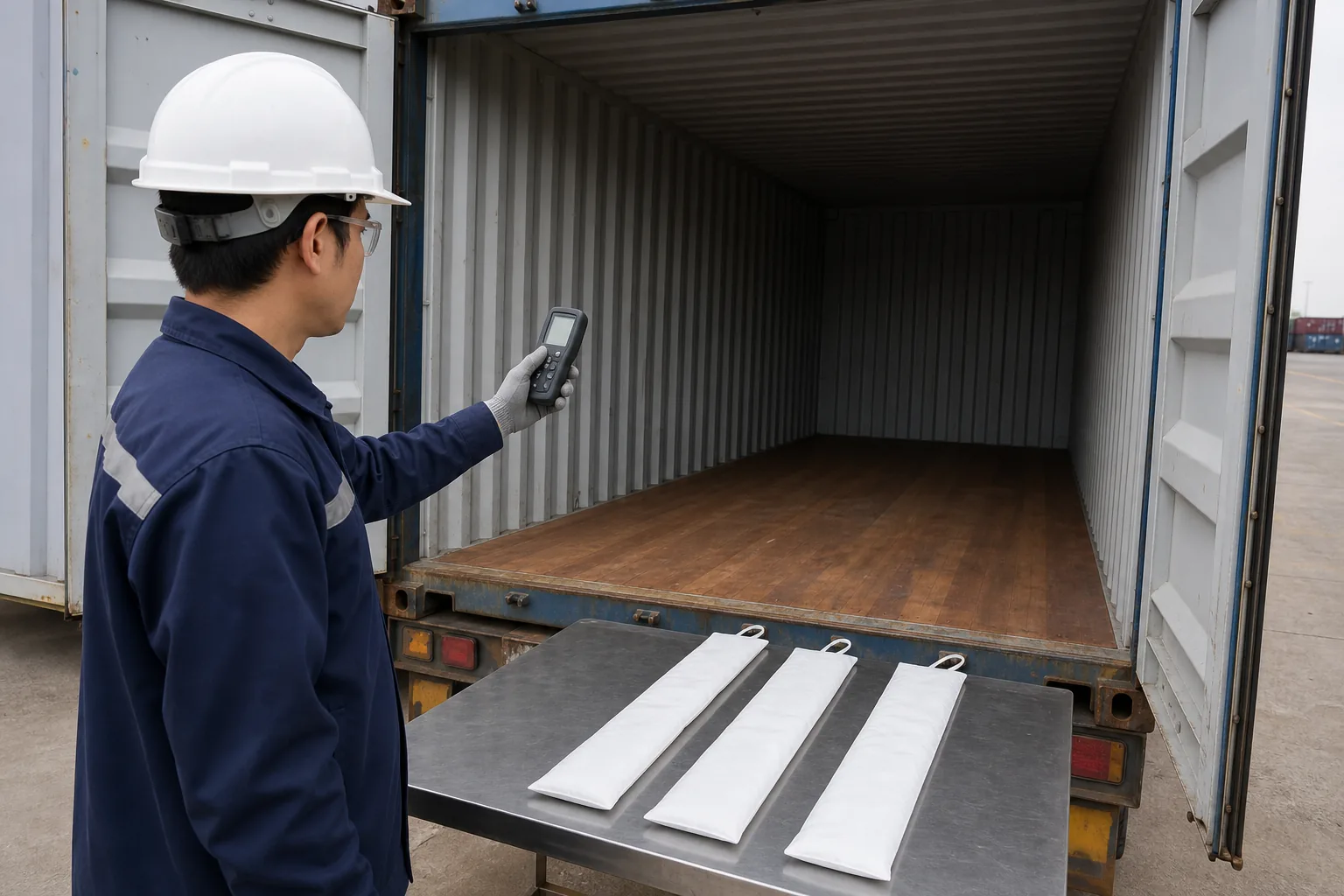
Use arrival data to improve the plan
At destination, record package condition, water marks, mould or corrosion, strip positions and logger data where available. If a problem occurs, review initial moisture, packaging, container condition, door-open time and temperature variation as one system; do not assume that desiccant quantity was the only cause. Results from several comparable shipments provide a stronger basis for route-specific adjustments.
Frequently asked questions
How many desiccant strips does a 20-foot or 40-foot container need?
There is no single safe quantity for every shipment. It must be assessed from cargo, initial moisture, packaging materials, route, season, duration and the technical data for the exact product.
Can desiccants solve a leaking-container problem?
No. Water ingress and excessively wet materials must be corrected at source; desiccants do not replace container and cargo-condition inspections.
May a hanging desiccant touch the cargo directly?
Only when the exact product instructions and cargo requirements permit it. The plan should prevent tearing, crushing, sharp-edge contact and any liquid from reaching cargo.