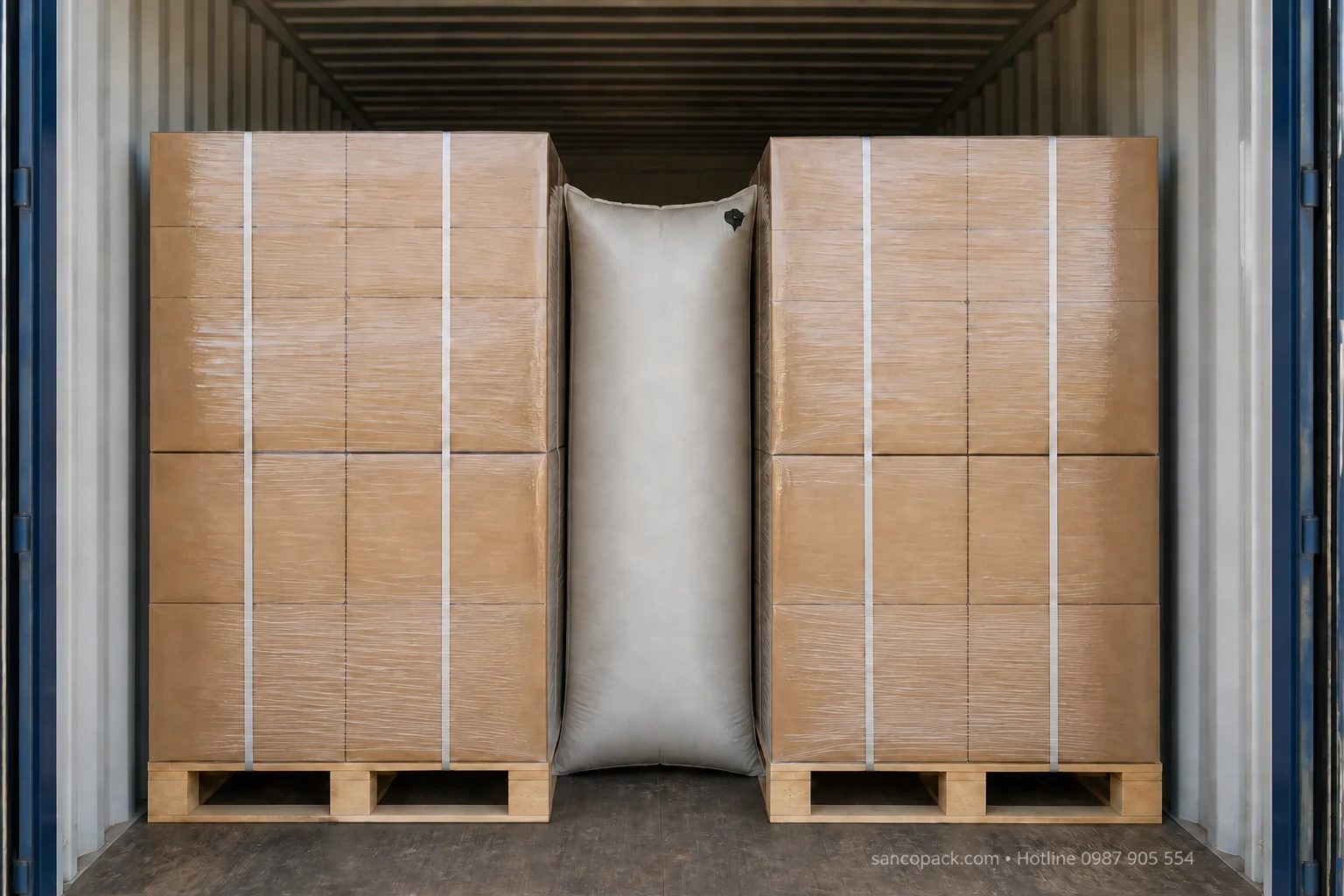
Do not select a bag from container size alone
A 20-foot or 40-foot container designation does not determine the dunnage air bag size. The useful inputs are the void remaining after the cargo is in its final position, the height of the contact area, the mass of the cargo group that may load the bag and the journey conditions. Two shipments in the same container type may need different products when pallet dimensions, stowage, package surfaces or expected movement differ. A quotation request should therefore include a loading diagram, photographs and measurements at several positions rather than container size alone.
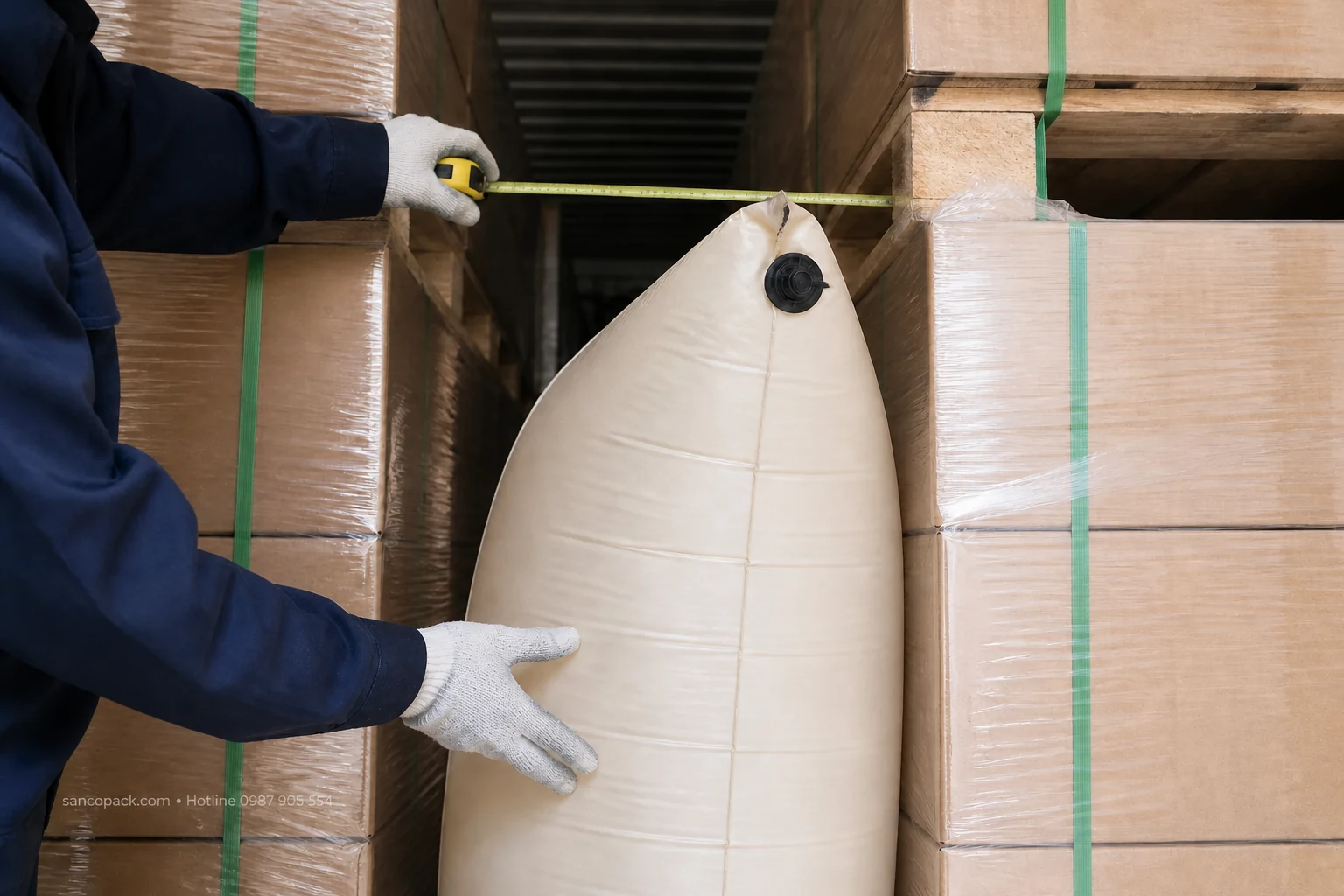
Record the selection data before choosing a product
- Minimum and maximum void width at every intended installation point.
- Height, depth and flatness of the two surfaces that will contact the bag.
- Cargo-group mass, centre of gravity, package rigidity and sliding or tipping tendency.
- Transport mode, transfers, route and expected temperature conditions.
- Pallet edges, nails, splinters, straps or projections that could abrade or puncture the bag.
Contact area and blocking capacity matter more than appearance
The IMO/ILO/UNECE CTU Code treats dunnage bags as blocking devices used in gaps between cargo units or between cargo and the CTU structure. Performance depends on the force imposed by the cargo, contact area, bag pressure capability and an appropriate safety factor. A bag may look firm yet remain unsuitable if it has too little contact, is folded or sits off-centre. Blocking capacity should not be inferred from external dimensions alone, and one universal rating should not be transferred to every shipment.
Protect the bag from sharp edges and the doorway
Remove nails, splinters, pallet corners and other projections before installing the bag. Uneven surfaces require suitable smoothing or protective material. The CTU Code also cautions against using a dunnage bag to fill space at the doorway unless precautions prevent the doors from opening violently. Keep the valve accessible, support the bag body across a stable area and never leave part of it suspended across a void or pressed against a cutting point.
Inflate to the instructions for the exact bag
Hand feel is not an inflation standard. Operators need the correct inflator and must follow the allowable gap and working-pressure information for the exact product. Pressure that is too low may allow loss of contact when conditions change; excessive pressure can increase the risk of bag failure or package deformation. Watch both cargo rows during inflation and stop if a pallet moves, cartons deform or the bag twists. Check the valve and cargo stability before leaving the position.
Use the bag within the complete securing plan
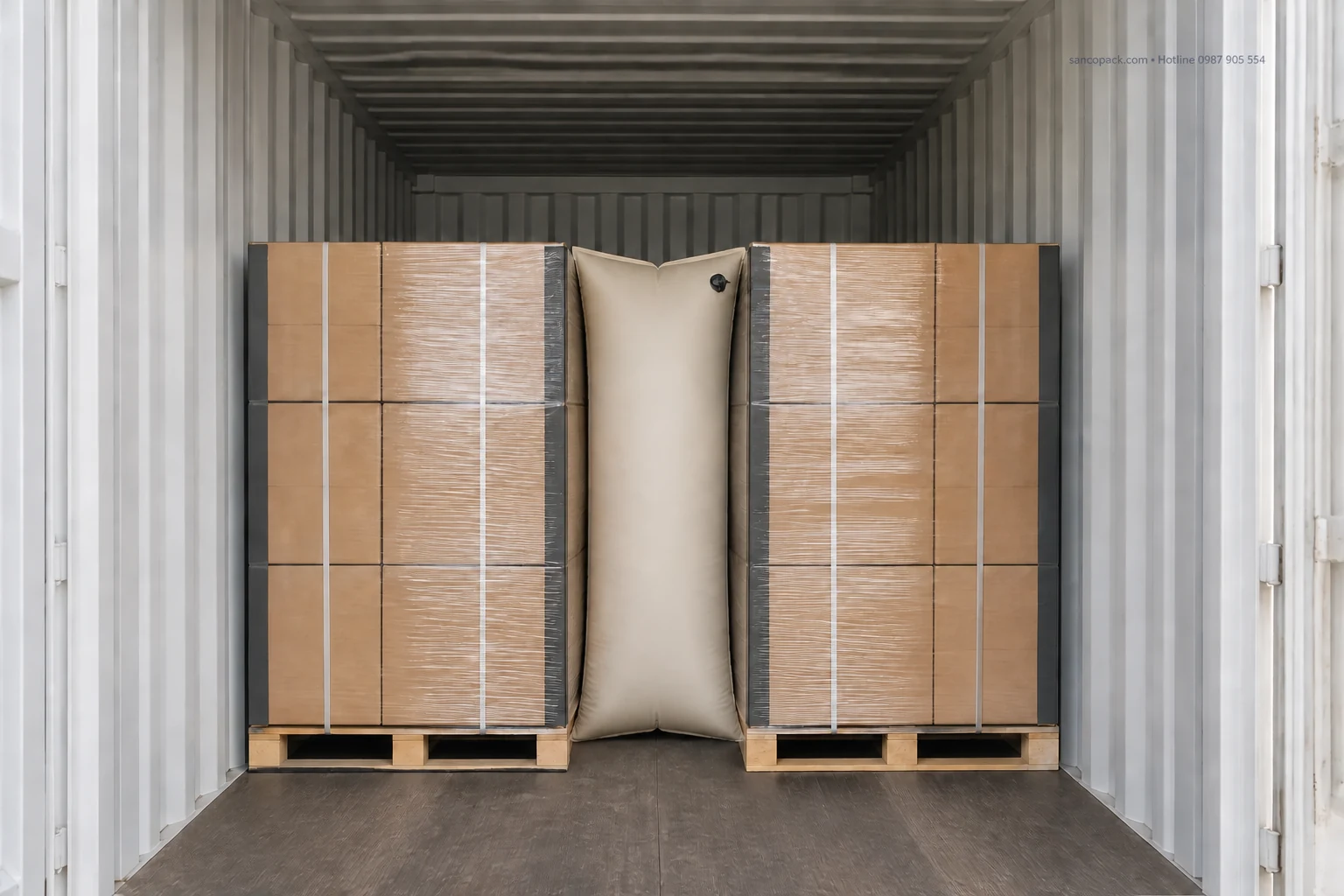
A dunnage air bag mainly controls a void and movement in the direction for which it was selected. It does not automatically replace lashings, anti-slip material, blocking members or floor reinforcement. Cargo at risk of longitudinal sliding, tipping, concentrated loading or irregular contact may require several methods used together. Packaging must also be strong enough to accept the contact force without crushing, tearing or transferring damaging loads to the product.
Pre-closing inspection checklist
- The bag model matches the assessed void, cargo load and transport mode.
- The bag is flat, has sufficient contact and does not touch a sharp edge.
- Inflation follows the technical instructions; the valve is sealed and accessible.
- Cargo is not lifted, shifted off the pallet or deformed after inflation.
- The doorway is safe and no bag can create a dangerous opening force.
- Position photographs, an overall photograph and material batch details are retained.
At destination, record bag position, valve condition, cargo movement, package deformation and any bag damage. Evidence from comparable journeys supports route-specific improvements. When asking Sancopack for a selection review, provide the measured void, package type, cargo-group mass, loading photographs and journey requirements so the proposed product can be checked against the real shipment.
Frequently asked questions
Can one dunnage air bag size be used in every container?
No. Selection should consider the measured void, contact area, cargo load, transport mode and the technical limits of the exact bag.
Does a dunnage air bag replace cargo lashings?
Not in every case. The bag controls a void; lashings, anti-slip material or blocking may still be required for other movement directions.
Should a dunnage bag be placed at the container doors?
Not without precautions that prevent the cargo or bag from causing a dangerous door-opening force.
What information is needed for product selection?
Provide void measurements, loading photographs, package type, cargo-group mass, route and securing requirements.